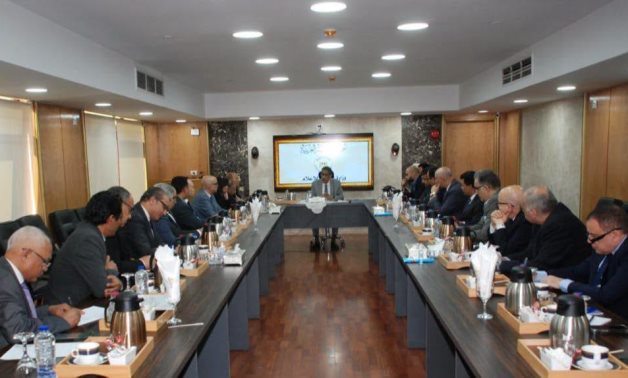




CAIRO – 25 May 2026: Diaa Rashwan, Minister of State for Information, affirmed that Egyptian journalism is the oldest in the region and remains the most influential and professional, with its rich legacy of journalistic standards passed down through generations for nearly two centuries.
The remarks were made during a meeting held by the Minister of State for Information with editors-in-chief of national newspapers and magazines, organized in cooperation with the National Press Authority.
The Minister expressed full confidence that the Egyptian press remains the most important element in the contemporary media landscape, despite the challenges facing national press institutions and the growing competition posed by digital media.
He pointed out that online media and modern digital communication tools also represent an opportunity, not a mere challenge, provided that press institutions engage strongly with the evolving media environment by effectively utilizing digital tools and platforms. He stressed the importance of delivering professional and impactful journalism that meets the needs of younger generations and modern readers.
Rashwan added that this would help create a strong, credible, and high-quality voice to confront the chaos and superficial content spread on some social media platforms by individuals lacking the experience and the sense of responsibility toward society.
Regarding the role of the Ministry of State for Information, Rashwan stated that, in line with the directives of the President and the tasks assigned by the Prime Minister, the Ministry’s role is to express official state policies and coordinate among media entities, institutions, and bodies, as well as across print, broadcast, and digital media platforms.
He said this coordination aims to ensure that media messages, regardless of the method of dissemination, remain consistent with facts and reality, adhere to professional standards, and serve the national interest and the needs of society.
He emphasized that this would be achieved without interference in the work of independent media bodies, but rather through full cooperation and coordination with them.
Rashwan also pledged that every effort would be made to ensure the rapid and accurate flow of information from ministries and state agencies to the media. He added that the Ministry would cooperate with all stakeholders in the media sector to guarantee the implementation of constitutional provisions, particularly those related to freedom of expression and media and press freedoms.
The Minister of State for Information praised the role played by the national press, emphasizing that “public service” journalism is ultimately the people’s press, driven not only by profit but also by social and national responsibility.
He therefore stressed the importance of all relevant institutions and their employees joining forces with the state to support the development of the sector and enable it to modernize its tools and keep pace with evolving times.
For their part, the editors-in-chief of national newspapers and magazines expressed hope that the Ministry of State for Information would play a significant role, especially as it is headed by a veteran journalist from the national press who understands the realities facing newspapers and journalists and can serve as a reliable bridge between the press and state institutions.
The editors-in-chief also called for greater support for newspapers, particularly in the areas of training and the establishment of digital infrastructure that would enable media institutions to engage effectively with digital media.
They further highlighted the economic challenges facing national newspapers, including declining print circulation, rising printing costs, and decreasing advertising revenues. They also stressed the urgent need to appoint and train a new generation capable of carrying forward the legacy of national journalism.
Rashwan pledged to explore solutions to these challenges in cooperation with the National Press Authority. He urged media institutions to prioritize digital media, conduct studies on reader trends and audience needs, and make better use of existing assets, including digitizing and utilizing newspaper archives.
He also stated that the Ministry would work to ensure the continued flow of official information and encourage greater responsiveness from officials toward newspapers and magazines.
In addition, Rashwan called for increased attention to investigative journalism that addresses societal issues through scientific and professional approaches, the expansion of innovative social and cultural coverage targeting younger audiences, and greater focus on the human dimension and issues that directly concern citizens in all topics covered by the media.

Be Social




Comments
Leave a Comment